Discuss
Start in chat
Scope the idea, search the literature, pressure-test the angle, and decide whether the project is worth writing.
Research writing agent
Write the paper. Keep the evidence trail.
Discover and read papers, analyze data, and develop manuscripts in one research workspace. Use each capability independently or connect your sources, saved analysis results, and drafts in a project.
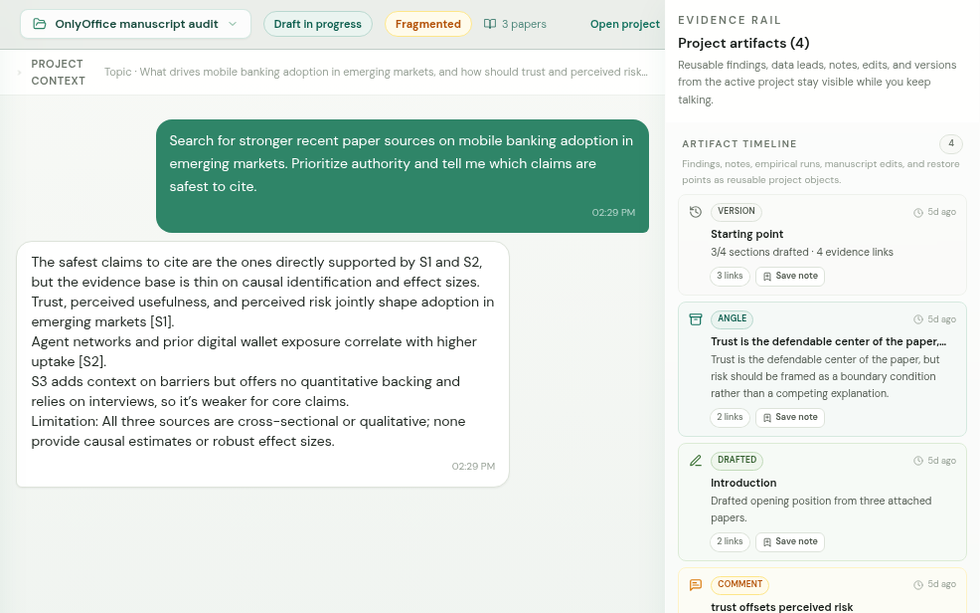
One research loop
Start with literature, data, a research question, or a manuscript. When you bring the work into a project, Cite-Agent keeps your papers, notes, analysis results, and writing connected with an inspectable evidence trail.
Discuss
Scope the idea, search the literature, pressure-test the angle, and decide whether the project is worth writing.
Collect
Papers, notes, exclusions, and source decisions stay attached to the project instead of disappearing into a transcript.
Validate
Datasets, outputs, figures, and interpretation notes become part of the same evidence trail as the citations.
Write
The DOCX is the artifact. Cite-Agent drafts, revises, cites, checks, and records how each section was built.
Research base
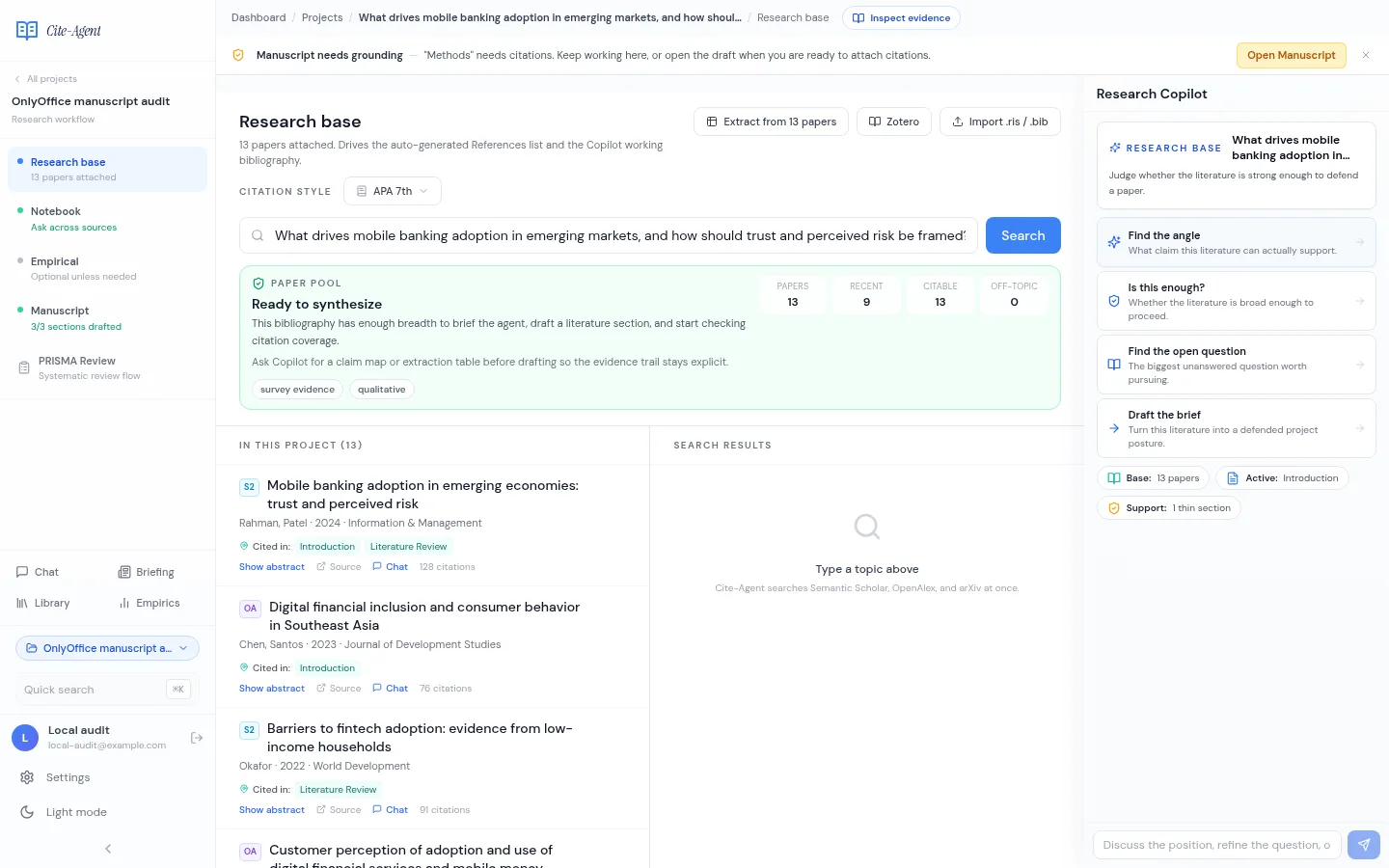
Not just a PDF tool
A normal chatbot gives you prose and leaves you to clean it up elsewhere. Cite-Agent keeps the source set, rejected directions, empirical route, comments, and model edits available beside the project.
13
Sources
papers in scope
2
Claim audits
signals to review
live
Model edits
diffs and versions
Manuscript surface
Manuscripts live inside the project with OnlyOffice for DOCX fidelity. The review rail keeps your research discussion, citations, comments, and revision history close to the document.
DOCX manuscript
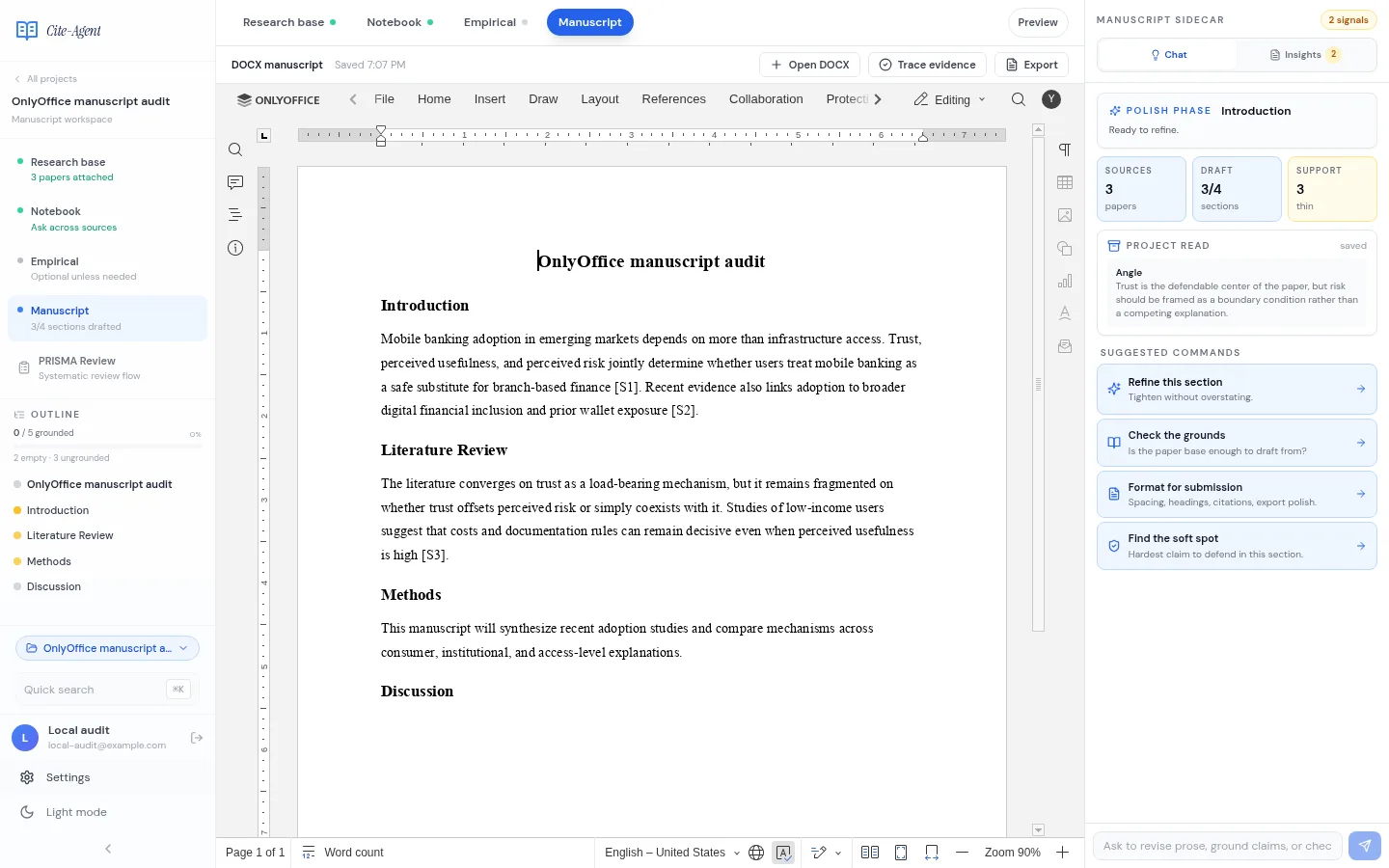
Start with a research idea, then let the agent help you search, analyze, draft, cite, check, and polish.
Explore the readonly example workspace·Demo data — not your account